
You are looking at premises costs. Maybe you are in a unit that has outgrown itself, or you are setting up for the first time and trying to make the numbers work without burning through your first year of revenue on rent and rates. If your business is in manufacturing, professional services, engineering or logistics and you are anywhere near Stoke-on-Trent, there is a practical incentive on the table that most small business owners either do not know about or do not fully understand.
The Ceramic Valley Enterprise Zone (CVEZ) Business Rates Discount scheme has been extended to March 2031. That is not a vague promise from a council press release. It is a confirmed, locally funded commitment covering all CVEZ sites, with a cap of £100,000 per year for your first three years of occupancy. For a small business making a location decision right now, that is worth getting across properly.
This is my attempt to explain it without the spin.
What Is the Ceramic Valley Enterprise Zone and Which Sites Are Included?

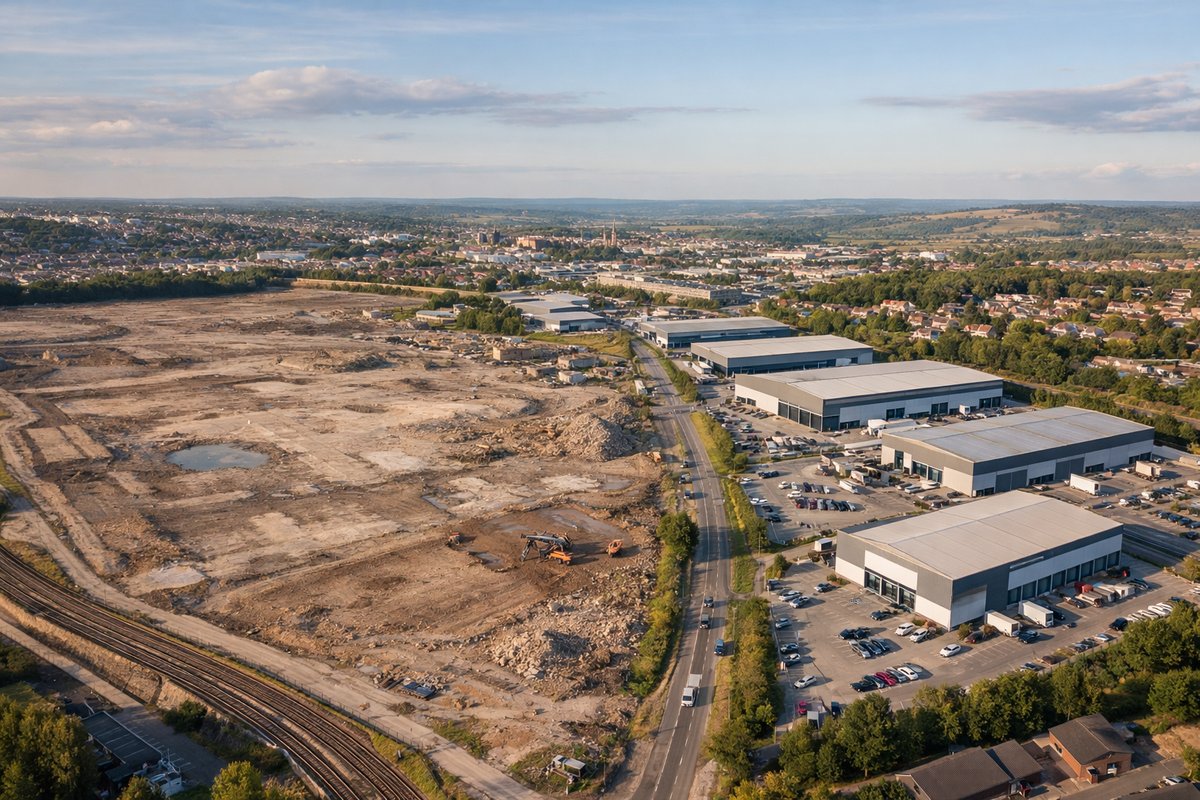
The Ceramic Valley Enterprise Zone is one of 48 designated Enterprise Zones in England, confirmed under MHCLG’s national Enterprise Zones framework. It sits across Stoke-on-Trent and Newcastle-under-Lyme, covering approximately 140 hectares of brownfield land. Much of it is former industrial and ceramics-heritage ground that the city has been working to regenerate for well over a decade.
The seven CVEZ sites and Etruria Valley
The zone covers multiple distinct sites across the Potteries area: Chatterley Valley East, Chatterley Valley West (Newcastle-under-Lyme), Tunstall Arrow, Ravensdale, Trentham Lakes South, and Meir Park. The significant addition from the 2025 extension is Etruria Valley, a 31.3-hectare site on the former Shelton Bar steelworks, now fully included within the Business Rates Discount scheme for the first time.
If you are considering Etruria Valley specifically, this is a meaningful moment. It is the largest single geographic addition to the scheme and it is backed by council investment tied to the broader regeneration of that corridor.
Why the extension matters to you now
In August 2025, Stoke-on-Trent City Council confirmed the Business Rates Discount extension, running from March 2026 to March 2031. The zone is on target to create more than 4,300 jobs by 2028. The extension is a five-year locally funded commitment, which tells you something about the council’s confidence in the zone’s trajectory.
For a new occupier arriving in 2026, the window is open. Businesses that move in now can access the full three-year discount within the scheme’s lifespan.
How Much Can You Actually Save? The Business Rates Discount in Plain English

The headline number that circulates in older press releases is £275,000. That figure comes from the House of Commons Library’s research on English Enterprise Zone incentives, which defined the business rate discount as up to 100 per cent over five years under the original national scheme. That scheme has expired. The current arrangement is different, and the distinction matters.
The current scheme: up to £100,000 per year for three years
The locally funded Business Rates Discount running from March 2026 to March 2031 is capped at £100,000 per year for the first three years of occupancy. That is a potential total saving of £300,000 per eligible business, which actually exceeds the old national scheme’s cap. The trade-off is that you get three years rather than five, and the funding comes from the council rather than central government.
That means the continuation of any future scheme beyond 2031 will depend on council decision-making at that point. Plan accordingly, and do not build a financial model that assumes the discount continues indefinitely.
A worked example of the savings
Consider a small advanced manufacturer taking a unit at Chatterley Valley East with a rateable value of £60,000 per year. Under the discount, that liability could be reduced to zero for years one to three, saving the business £60,000 per year and £180,000 over the three-year period. For a business with a rateable value at or above the £100,000 cap, the annual saving is capped, but the three-year total still reaches £300,000.
If you are currently paying £40,000 to £80,000 per year in business rates on existing premises, this scheme is the equivalent of a full rates holiday for three years. That is not a marginal gain. It is a material shift in your cost base.
How the 2026 scheme differs from the earlier programme
The original government-backed Business Rates Discount ran from 2016 and expired in March 2021. That scheme was capped at £55,000 per year over five years, giving a maximum saving of £275,000. Some older content online still references these figures as current. They are not. The current CVEZ page on the council website is the correct reference point for live eligibility details.
Enhanced Capital Allowances on qualifying plant and machinery were also available under the national scheme, providing 100 per cent first-year relief. That element expired in March 2021. If you are making significant capital investment in machinery, check directly with the council or your accountant whether any local or successor arrangement applies before factoring this into your decision.
Who Qualifies? Sector Tests, Growth Requirements and the Application Process

This is where most of the confusion sits, and where a bad assumption costs you time. Not every business moving to a CVEZ site qualifies for the Business Rates Discount automatically. There are sector tests and a growth requirement that filter out a significant portion of applicants.
Which sectors are eligible in 2026
According to the government’s official Enterprise Zone finder for Ceramic Valley, the target sectors are:
- Advanced Materials
- Energy and Power Generation
- Advanced Manufacturing and Engineering
- Business and Professional Services
- Warehouse and Distribution
If your business sits clearly within one of these, you are in the right lane. If you are on the edge (a creative agency with some professional services work, for example), it is worth a direct conversation with the council’s business team before committing to premises on the basis of the discount.
The 20 per cent employment growth test explained
To qualify, businesses must demonstrate 20 per cent employment growth. This is a forward-looking commitment. You need to evidence that your occupancy of the CVEZ unit will result in meaningful headcount growth, not just that you moved in and kept staffing flat.
For a business with five employees, 20 per cent means one additional hire. For a 20-person team, it means four. This is a real filter. If you are relocating purely to cut costs without any growth plan attached, the discount may not be available to you. Build the 20 per cent threshold into your business case before you apply, not after.
What the scheme does not cover
The scheme does not apply to retail, hospitality or purely residential developments. If you run a café, a shop or a venue, the CVEZ Business Rates Discount is not designed for you. This is worth knowing upfront to avoid a wasted enquiry process.
Stacking Your Advantages: CVEZ Plus Skills Support and Growth Hub Access
The business rates discount is the headline number, but the stronger argument for locating in the CVEZ in 2026 is that the discount does not sit in isolation. There are at least three additional layers of support available to small business occupiers, and most of the existing content about the zone does not explain how they fit together.
Combining business rates savings with UKSPF Skills Hubs
Stoke-on-Trent City Council confirmed an additional £4.4 million UKSPF allocation that includes Skills Hubs specifically designed to support small businesses in upskilling their workforce. This is delivered through Staffordshire Chambers of Commerce and the University of Staffordshire.
The practical point: if you are a manufacturer taking on new staff to meet the 20 per cent employment growth threshold, you can access subsidised or free training for those new hires through the Skills Hub at the same time as your rates discount is running. You are not just saving on your rates bill. You are also reducing your workforce development costs.
Free growth advisory from the Stoke and Staffordshire Growth Hub
The Stoke and Staffordshire Growth Hub offers free business support, mentoring and advisory services to businesses across the region. This is separate from the CVEZ scheme but sits alongside it well.
If you are a first-time employer or scaling past the point where you can manage everything yourself, the Growth Hub’s advisory programme is worth accessing. CVEZ occupiers are particularly well-placed because their growth ambitions are already evidenced through the employment growth requirement.
University innovation access and R&D support
Keele University and the University of Staffordshire both have enterprise and innovation programmes that connect with the North Staffordshire business community. If your business has any element of product development, materials innovation or engineering R&D, there are routes to accessing university expertise and facilities that do not require you to be a large corporate. These are worth investigating in parallel with your CVEZ application, particularly if your sector aligns with Advanced Materials or Advanced Manufacturing.
Why Stoke-on-Trent Beats Other UK Locations on Cost and Connectivity


The business rates discount is a compelling incentive in isolation. But the broader cost picture for CVEZ occupiers is more favourable still once you benchmark it against alternative locations.
Rent and labour cost benchmarks against Birmingham and Manchester
According to the government Enterprise Zone finder for Ceramic Valley, office rents in the CVEZ are 60 per cent below Birmingham and Manchester. Industrial rents are 20 per cent below comparable cities. Labour costs are 10 per cent below the UK average.
Run those three numbers together with a three-year business rates holiday at up to £100,000 per year, and the total-cost-of-occupancy argument for Stoke becomes difficult to dismiss from a purely financial standpoint.
I will be direct about the reality of this area. Stoke-on-Trent has real economic challenges: post-industrial transition, lower average wages than the national figure, and a local spending power constraint that anyone running a consumer-facing business here knows well. But for a B2B manufacturer, a logistics operation or a professional services firm serving clients nationally or regionally, those challenges do not touch your revenue model. What they do touch, positively, is your cost base. That is the calculation worth making.
Infrastructure and sector clustering in the Potteries
The concentration of advanced manufacturing, engineering and distribution businesses within the CVEZ sites creates a practical clustering effect. Supply chains get shorter. Hiring from a local talent pool familiar with industrial work becomes more straightforward. The proximity of sites like Chatterley Valley and Tunstall Arrow to the A500 and M6 corridor means logistics costs stay competitive even as you benefit from lower-cost premises.
This is not abstract regional boosterism. The zone’s sector focus has been deliberately chosen to build on what North Staffordshire already does well, rather than import industries that have no roots here.
What Happens When You Outgrow the Zone?
One thing worth flagging that most content about the CVEZ does not address: the council has acknowledged a shortage of move-on space for businesses that grow beyond their initial unit. If the Business Rates Discount works as intended and you hit your 20 per cent growth target and then some, you may find that the next unit you need simply is not available within the zone at the scale you require.
This is not a reason to avoid the zone. It is a reason to plan beyond it. Build your three-year discount period into a broader growth model that factors in where you locate next, what your rateable value will look like without the discount, and whether your margin at that point supports the move. The discount is a launch pad, not a long-term subsidy.
If you are a Staffordshire business and you are at the stage where you need to think through that kind of financial planning and operational sequencing, that is exactly the work I do through Wright Advisory. Not grant-finding. Not funding applications. The work that comes after: cashflow forecasting, KPI design, scaling decisions, operations structure. Once the rates incentive is locked in, the real question is how you deploy that financial headroom without burning it. Book a free discovery call and we can talk through whether that is useful for where you are right now.
Your Next Steps
If the CVEZ looks like a fit for your business, here is a practical sequence:
- Check your sector against the five eligible categories listed above. If you are in advanced manufacturing, engineering, professional services, materials or logistics, you are in scope.
- Map out your headcount over the next three years and confirm you can evidence 20 per cent employment growth. If you cannot, the discount is unlikely to be available to you.
- Contact the Stoke-on-Trent City Council business team directly to begin a formal eligibility conversation. Do not assume you qualify based on this article alone. The council holds the definitive criteria and the application process.
- In parallel, register with the Stoke and Staffordshire Growth Hub for free advisory support. This sits alongside your CVEZ application without conflict.
- Ask the Growth Hub specifically about UKSPF Skills Hub access for any new hires you plan to bring on as part of your growth commitment.
The extension to March 2031 means the window is genuinely open for businesses making a move in 2026. The question is whether you use it.
Leave a Reply