
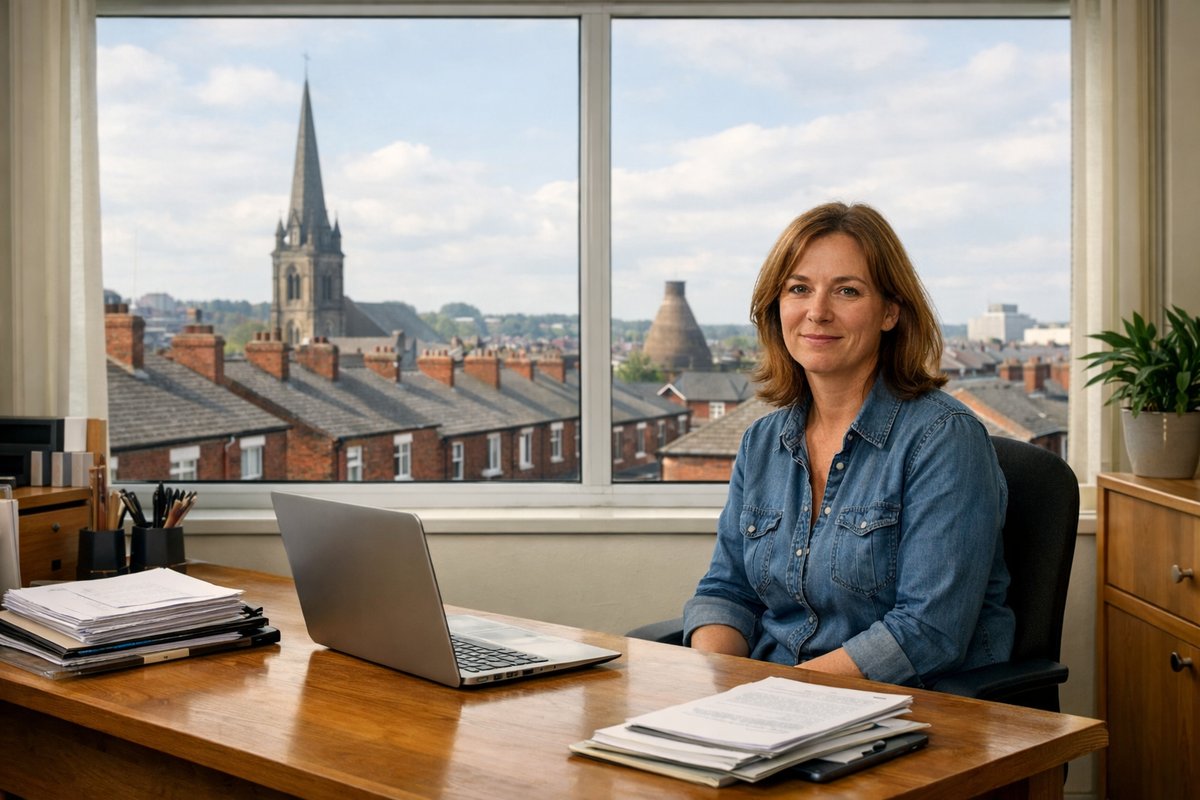
Stoke-on-Trent is one of the most affordable places in England to start a business. Commercial rents are low compared with other UK cities, the Ceramic Valley Enterprise Zone continues to attract investment, and Hanley city centre is mid-regeneration. If you have been sitting on a business idea, June 2026 is a reasonable time to act on it.
The most common mistake new founders make is overcomplicating the structure decision before they have traded a single pound. This guide cuts through that. It covers what structure actually makes sense when you are starting out, how the HMRC registration process works in 2026, and what local support in Stoke-on-Trent you should be using from day one.
Why Sole Trader Is the Right First Structure

According to the official GOV.UK guidance on business legal structures, you have three main options when you start a business in the UK: sole trader, partnership, or limited company. Each has different administration, tax treatment, and liability implications.
- Sole trader: You and the business are legally the same entity. Simple to set up, no Companies House registration required, and you keep all profits after tax.
- Partnership: Two or more people share ownership. Still relatively simple, but requires a partnership agreement and shared liability.
- Limited company: A separate legal entity from you. More administration, annual Companies House filing, and corporation tax rather than income tax. Better for certain growth scenarios, but more overhead from day one.
For most people launching in Stoke-on-Trent, sole trader is the right starting point. It removes friction and lets you validate your idea before you add the overhead of a limited company. If you grow to a point where the liability protection or tax efficiency of a limited company matters, you can convert later. Start simple.
One caveat: if you are entering a sector with significant liability risk, or you already know you will be bringing in co-founders, take ten minutes to read the GOV.UK comparison page before you register. The decision is yours to make with full information.
How to Register as a Sole Trader with HMRC in 2026
Choosing your trading name
As a sole trader, you can trade under your own name or choose a trading name. If you use a trading name, it cannot include words suggesting you are a limited company (such as “Ltd” or “Limited”) and it must not be misleading or offensive. You do not need to register the name anywhere, but check it does not infringe an existing trademark before you print business cards or build a website.
Setting up your GOV.UK One Login
HMRC completed its migration to GOV.UK One Login as the primary authentication method for new users in 2024 to 2025. If you have used the old Government Gateway before, your credentials still work. If you are registering for the first time, you will set up a GOV.UK One Login using your email address and a form of photo ID.
Older guides still reference only Government Gateway. Ignore that step if you are registering fresh in 2026. One Login is the current default and the process is straightforward.
Completing the Self Assessment registration
Once you have your login, go to the HMRC Self Assessment registration page and complete the online form. You will be asked for your National Insurance number, contact details, and information about the nature of your self-employment. The form takes around fifteen minutes.
One rule that many guides get wrong: the legal deadline to register is 5 October after the end of the tax year in which you started trading, not three months from the date you start. If you start trading in Stoke in June 2026, your registration deadline is 5 October 2027. That said, there is no sensible reason to wait. Register immediately and remove the uncertainty.
Your UTR number and what to do with it
After you register, HMRC will post you a letter containing your Unique Taxpayer Reference (UTR). This is a ten-digit number that identifies you for all Self Assessment purposes. Keep it somewhere safe. It arrives within a few weeks, sometimes longer during busy periods. You will need it every time you file a return or contact HMRC about your tax affairs.
Worth noting: if your total income from self-employment is under £1,000 in a tax year, the trading allowance means you do not need to register at all. This is relevant for anyone testing a side hustle before committing to it full time.
Tax, National Insurance and Making Tax Digital in 2026


Self Assessment filing and payment deadlines
As a sole trader, you file a Self Assessment tax return once per year. The key dates are:
- 31 January: Online return filing deadline and payment of any tax owed for the previous tax year.
- 31 July: Second payment on account (an advance payment towards the following year’s tax bill, if applicable).
- 5 April: End of the tax year.
If you register in June 2026, your first Self Assessment return covers the 2026/27 tax year and is due by 31 January 2028. That sounds a long way off, but tax is calculated on your profits across the full year. Keep records from day one.
Making Tax Digital: the deadlines you cannot afford to miss
This is the single most important compliance change affecting sole traders right now, and most generic guides cover it badly. HMRC’s self-employment guidance collection covers Making Tax Digital for Income Tax Self Assessment (MTD ITSA) in full. The mandatory thresholds are:
- April 2026: Mandatory for qualifying income over £50,000.
- April 2027: Mandatory for qualifying income over £30,000.
- April 2028: Mandatory for qualifying income over £20,000.
Under MTD ITSA, you will be required to use compatible software to keep digital records and submit quarterly updates to HMRC rather than a single annual return. If you are setting up in Stoke in 2026, adopt digital bookkeeping software from day one. Whether that is QuickBooks, Xero, FreeAgent, or another MTD-compatible option, the habit you build now will save a painful transition later when the threshold reaches your income level.
National Insurance for the self-employed
As a sole trader, you pay two classes of National Insurance:
- Class 2: A flat annual amount (£163.80 for 2026/27), paid via Self Assessment.
- Class 4: Calculated as a percentage of your profits above the lower profits limit, also paid via Self Assessment.
Both are collected when you file your annual return. You do not need to set up separate standing orders or direct debits for NI.
Record keeping from day one
Keep every invoice, receipt, and bank statement related to your business. HMRC can open an enquiry up to five years after the relevant tax year, so your records need to last at least that long. The VAT registration threshold sits at £90,000 for 2026/27. You can register voluntarily below that figure if it is commercially useful (for example, if your clients are VAT-registered businesses), but you must register once your turnover exceeds it.
Local Business Support in Stoke-on-Trent

The Growth Hub: your free first call
The Stoke-on-Trent and Staffordshire Growth Hub is the local authority-backed business support service for the region. For a new sole trader, it is the first phone call worth making. The advisers understand the Staffordshire business landscape and can identify sector-specific opportunities or pitfalls that a generic national guide will miss.
Call 0300 111 8002 or email GrowthHub@staffordshire.gov.uk. Support is free.
Grants and funding for new businesses
Two programmes are worth being aware of as you set up:
- Stoke-on-Trent Invest and Grow Funding: The Invest and Grow programme has offered grants of £10,000 to £50,000 for businesses in Advanced Manufacturing, Digital, Life Sciences, and Energy, funded through the UK Shared Prosperity Fund. Check the Growth Hub for the current status of any successor rounds.
- Fly High Start-Up Grants: Stoke-on-Trent City Council’s Fly High programme previously offered grants of £500 to £3,000 for businesses trading under 12 months or pre-launch, funded via UKSPF. Contact the council or Growth Hub to ask about the current or successor round.
Grant availability changes. Do not build your business plan around a specific grant being open when you need it. Treat any grant as a bonus, not a foundation.
For a broader starting point, the UK Start-Up Loans scheme offers up to £25,000 with free mentoring for businesses trading under 24 months. Apply through the GOV.UK guidance collection or directly via the British Business Bank.
Trader registration for credibility
If you are a tradesperson operating in Stoke-on-Trent or North Staffordshire, register for free at the Staffordshire and Stoke-on-Trent Trader Register (traderregister.org.uk). It is a free trust signal that local consumers actively check when looking for reliable tradespeople. It takes minutes and costs nothing.
The Staffordshire Chambers Skills Hub also offers up to £1,000 per business in non-accredited training grants for start-ups and SMEs. If you need to upskill in a specific area as you launch, it is worth a conversation with the Chambers before you pay for training out of pocket.
After Registration: Bank Accounts, Insurance and Your First Return
Opening a business bank account
You are not legally required to open a separate business bank account as a sole trader. But you should. Mixing personal and business transactions makes record keeping significantly harder and will cost you time when you come to file your return. Most high-street banks and digital-first providers (Starling, Monzo Business, Tide) offer sole trader accounts. You will typically need your UTR number and proof of identity to apply.
Insurance: sort this before you start working
Insurance requirements depend entirely on your sector. Most service-based sole traders need public liability cover as a minimum. If you provide advice, design, or other professional services, you likely also need professional indemnity insurance. Some clients and contracts will require you to hold specific levels of cover before they will engage you. Sort this before you start working, not after your first complaint.
For further guidance on insurance obligations, the HMRC Tax Confident sole trader page covers the basics in plain English alongside record keeping obligations.
Preparing for your first Self Assessment return
The gap between registration and your first tax return feels like breathing room. It is not. Starting your record-keeping habits now means you will not be scrambling through twelve months of bank statements in January when the deadline is three days away.
Keep a simple log of every income payment and every business expense as it happens. If you have adopted MTD-compatible software already (which I would strongly recommend for any Stoke-based sole trader setting up in 2026), this log builds itself. If you are still on spreadsheets, be rigorous and consistent from the start.
Your first Self Assessment return, if you register in June 2026, covers the 2026/27 tax year and is due by 31 January 2028. The HMRC self-employment guidance collection is your most reliable ongoing reference for allowable expenses, deadlines, and any rule changes between now and then.
Your Next Step
You now have everything you need to register as a sole trader in Stoke-on-Trent and stay compliant through your first trading year. The immediate actions are straightforward: set up your GOV.UK One Login, complete the Self Assessment registration, open a dedicated bank account, and call the Growth Hub on 0300 111 8002 to find out what local support applies to your sector.
Do not wait for the perfect moment. Register now. The legal deadline is 5 October 2027 if you start trading this month, but registering immediately removes the uncertainty and lets you focus on building something.
Once the registration and compliance side is sorted, the harder questions start. How do you build a cash flow forecast that actually reflects your local market? How do you price your services so the business is genuinely viable? How do you design your operations so everything does not depend on you personally? Those are the questions I work through with founders day to day.
If you are a Staffordshire business owner who wants to think through your financial planning, cash flow forecasting, or how your operations need to be structured as you grow, book a free discovery call with Wright Advisory. No pressure, no pitch. Just a straight conversation about what you are building and whether I can add anything useful to it.
Leave a Reply