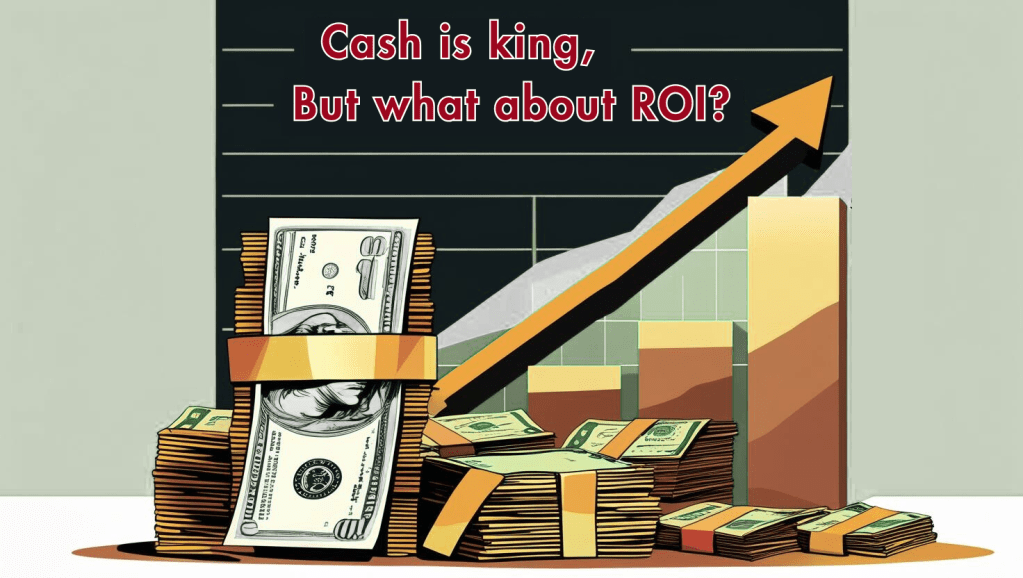
At Stoke Startup, we’re on a mission to empower Stoke-on-Trent’s youth to turn their bold ideas into thriving businesses. We believe that every young entrepreneur has the potential to not only achieve personal success but also contribute to the transformation of our city. However, building a successful business requires more than just passion and innovation, it demands a baseline understanding of key financial principles. Two concepts that are critical for any entrepreneur are cash flow and return on investment (ROI). While “cash is king” is a well-known mantra in the business world, the importance of ROI is often overlooked, especially among new entrepreneurs. In this article, we’ll explore why both are essential for your business’s success and how understanding ROI can lead to better decision-making, not just in business but in life as well.

Why Cash Flow is Crucial for Startups
Cash flow is often referred to as the “lifeblood” of a business, and for good reason. It represents the movement of money in and out of your business, and without a healthy cash flow, even a profitable company will struggle to survive. For startups, managing cash flow is particularly vital because many new businesses operate with limited resources and may not generate profits immediately. To keep a grip on cash flow, there are two simple considerations: average time to pay suppliers, and average time to get paid by your customers. If there are any lines of credit in the equation, it’s likely cash will follow a somewhat predictable pattern over the course of a period – what matters however, is that it trends upward to growth!
Here’s why cash flow matters:
- Paying the Bills: You need cash to cover operational expenses like rent, utilities, salaries, and supplies.
- Seizing Opportunities: Having cash on hand allows you to take advantage of opportunities, such as bulk purchasing discounts or investing in growth.
- Weathering Downturns: A cash reserve can help your business survive during slow periods or economic downturns.
Poor cash flow management can lead to missed payments, strained relationships with suppliers, and in the worst cases, even bankruptcy. Therefore, monitoring and managing your cash flow should be a top priority for any young entrepreneur. There are plenty of resources available, including free tools and guides, to help you track and improve your cash flow. For more detailed insights, check out this guide on Cash Management.


Understanding Return on Investment (ROI)
While cash flow ensures your business stays afloat, ROI helps you make strategic decisions that can lead to long-term success. ROI, or Return on Investment, is a measure of the profitability of an investment. It’s calculated using the following formula:
% ROI = (Net Profit from Investment \ Cost of Investment) x 100
For example, if you invest £1,000 in a marketing campaign and it generates £1,500 in additional revenue, your ROI would be:
% ROI = (500 \ 1000) x 100 = 50%
A higher ROI indicates that your investment is generating more profit relative to its cost, which is crucial for sustainable growth.
NOTE: ROI is typically calculated over period repetitions, E.g., Yearly ROI.
Why ROI Matters
Understanding ROI allows you to:
- Prioritise Investments: By calculating the potential ROI of different projects or expenditures, you can focus your resources on those that will yield the highest returns.
- Measure Performance: ROI helps you evaluate the effectiveness of your strategies and make data-driven decisions.
- Manage Risk: Knowing the potential ROI can help you assess the risk involved in an investment and decide whether it’s worth pursuing.
For young entrepreneurs, mastering ROI can be a game-changer. It helps you allocate your limited resources wisely and ensures that every pound spent contributes to your business’s growth. Yet, despite its importance, ROI is often under-discussed compared to cash flow, leaving many entrepreneurs without a clear framework for evaluating their decisions.
Expert tip: No need to remember the ROI formula, just use an online calculator like this one.

ROI Beyond Business Finances
While ROI is traditionally associated with financial investments, its application extends far beyond the balance sheet. In fact, considering ROI in all areas of life can lead to better decision-making and ultimately a more fulfilling existence.
For instance:
- Time Management: When you spend time on an activity, what do you gain in return? Spending time with family might yield stronger relationships and improved mental health, which are invaluable.
- Personal Development: Investing effort into education or skills training can lead to career advancement and personal growth.
- Health: Spending on gym memberships or healthy food might seem like an expense, but the return is better health and potentially lower medical costs in the future (Yes, you may consider this my official written down prediction for a privatised NHS in the UK).
By thinking about ROI in these terms, you can make more informed choices that align with your long-term goals and values. This broader perspective on ROI can help you balance your business ambitions with your personal well-being, ensuring that you’re not just chasing profits but also building a life you love. This broader perspective on ROI is supported by research into non-financial returns, such as this article on the value of time investment.
Balancing Cash Flow and ROI
As a startup, you need to balance the need for immediate cash flow with long-term ROI. This can be challenging, but it’s essential for sustainable success. Here are some strategies to consider if you’d like to achieve this balance:
- Bootstrap Wisely: Use your own resources or reinvest profits to fund growth, but only in areas that promise a good ROI.
- Seek Funding Prudently: If you need external funding, choose investors or lenders who understand your vision and offer terms that won’t strangle your cash flow.
- Monitor Metrics: Keep a close eye on both your cash flow and ROI metrics to ensure you’re on a trajectory for growth.
- Plan for the Future: While focusing on immediate cash needs, don’t forget to invest in initiatives that will pay off in the long run.
By mastering both cash flow and ROI, you can create a business that is not only financially stable but also positioned for growth and innovation.

Conclusion
In conclusion, while “cash is king” is a vital principle for any business, especially startups, understanding and applying ROI can take your decision-making to the next level. By considering the return on every investment (whether it’s money, time, or effort) you can make choices that not only keep your business afloat but also propel it towards success. At Stoke Startup, we’re here to support you every step of the way, providing the resources and community you need to thrive. So, the next time you’re faced with a decision, ask yourself, “What’s the ROI?” It might just be the key to opening the next door for your business.
Ready to take control of your business’s finances? Join our community at Stoke Startup and access free resources, expert tips, and local insights to help you succeed. Sign up today and start your journey towards entrepreneurial success!
Ethan Wright
Founder, Stoke Startup

 Stoke Startup
Leave a comment